
Are Cruciferous Vegetables Bad for Your Thyroid? What the Research Actually Says About Liver Detox and Hormone Health
By Dr. Kendall Perrine, ND | Purist Natural Medicine Dana Point (Orange County) | Arroyo Grande (San Luis Obispo) | Virtual Health Coaching Worldwide
Educational disclaimer: This article is for informational purposes only and does not constitute medical advice, diagnosis, or treatment. The information shared here is intended to support general wellness education. Always consult with a qualified, licensed healthcare provider before making changes to your diet, supplement routine, or health protocol — especially if you have a diagnosed thyroid condition, hormone disorder, or are pregnant.
If you have ever been told to avoid broccoli, kale, or cabbage because of your thyroid, you are not alone. This is one of the most common pieces of dietary advice circulating in wellness spaces, and it is largely based on outdated, context-free science.
Here is what the current research suggests: for most healthy adults eating normal dietary portions, cruciferous vegetables are not a meaningful threat to thyroid function. In fact, they are among the most well-studied foods for supporting liver detoxification and healthy hormone metabolism. This article explores what the science says, how preparation method affects their benefits, and what to consider if you have a thyroid condition or hormone imbalance.
What Are Cruciferous Vegetables?
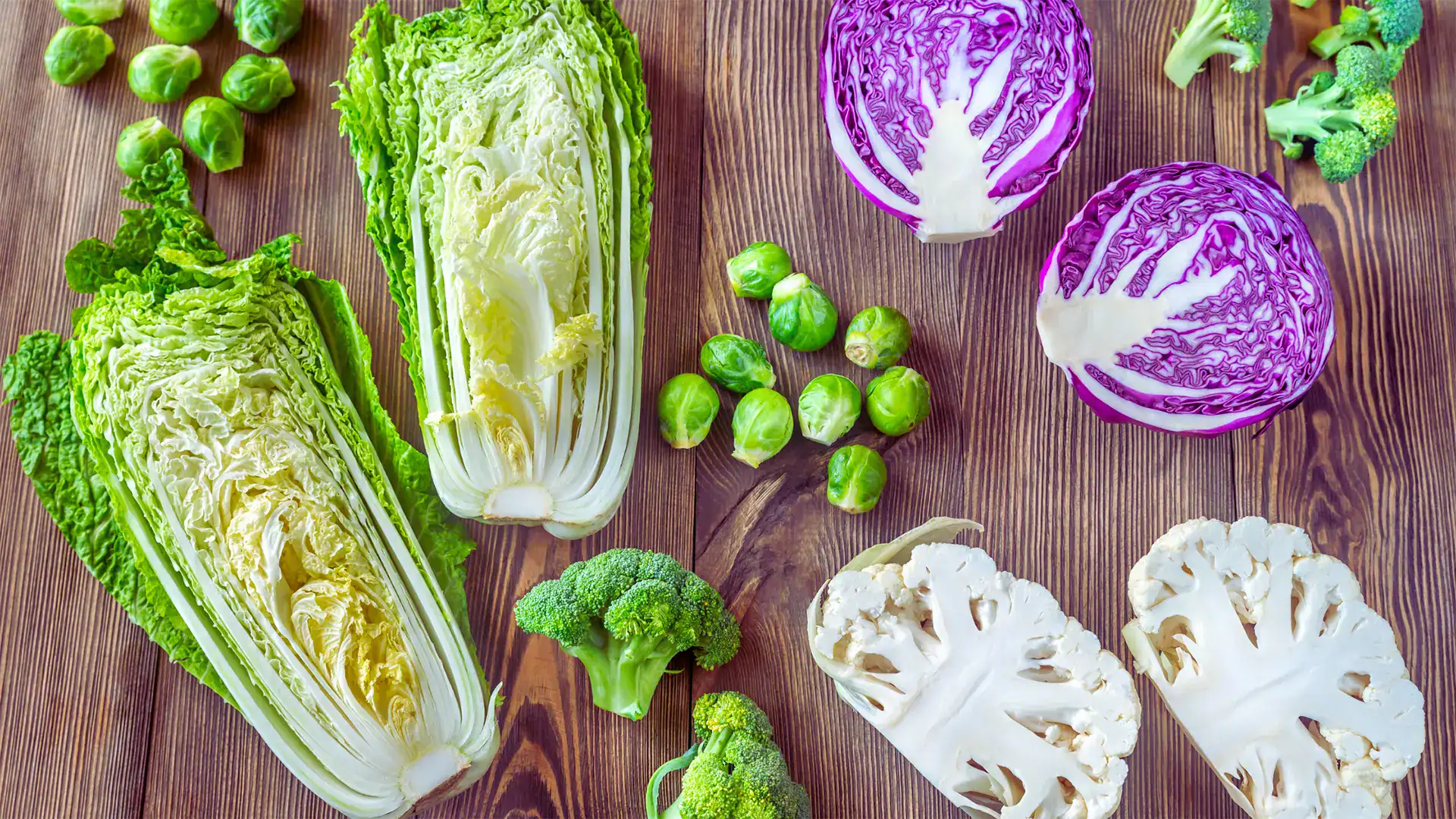
Cruciferous vegetables belong to the Brassicaceae family and include broccoli, kale, cabbage, cauliflower, Brussels sprouts, arugula, bok choy, radish, turnips, and watercress. They are nutritionally dense across the board, but what makes them particularly interesting from a research standpoint is their sulfur-containing compounds called glucosinolates.
When you chew, chop, or blend a cruciferous vegetable, an enzyme called myrosinase is released and converts glucosinolates into bioactive compounds — including sulforaphane, indole-3-carbinol (I3C), and diindolylmethane (DIM). Research suggests these compounds play a role in supporting the body’s natural detoxification pathways and healthy hormone metabolism.
The Thyroid Question: What Does the Research Say?
The concern around cruciferous vegetables and thyroid function centers on goitrogens — specifically goitrins and thiocyanates — compounds formed from glucosinolates that may compete with iodine for uptake by the thyroid gland. In theory, reduced iodine uptake could affect thyroid hormone production.
However, research consistently points to several important contextual factors.
The iodine deficiency connection. Early studies from the 1920s through the 1950s that flagged goitrogenic foods were conducted in populations that were already iodine deficient. This context is rarely mentioned when the concern gets passed along in popular wellness content. Current research suggests that adequate iodine intake significantly mitigates the goitrogenic potential of normal dietary cruciferous vegetable consumption.
Dose matters considerably. The most frequently cited case report in the literature involves a woman hospitalized with severe hypothyroidism after consuming approximately 1 to 1.5 kilograms of raw bok choy every single day for several months. That is well beyond any realistic everyday eating pattern.
A 2024 systematic review published in the International Journal of Molecular Sciences evaluated the cumulative evidence and concluded that moderate consumption of cruciferous vegetables is safe for most people with adequate iodine intake, and that amounts sufficient to cause thyroid harm are far beyond typical dietary intake.
For individuals with Hashimoto’s thyroiditis, some emerging research suggests that the anti-inflammatory and immune-modulatory compounds in cruciferous vegetables may actually be supportive rather than harmful. That said, this is an area where individualized guidance from your healthcare provider matters, as responses can vary.
If you have a diagnosed thyroid condition or are on thyroid medication, speak with your provider before making significant changes to your diet.
Where Cruciferous Vegetables Show the Most Research Support: Liver Detoxification
This is where the science is most robust and consistently positive.
Your liver processes and neutralizes substances through two main phases. Phase 1 converts potentially harmful compounds — including hormones, environmental chemicals, and metabolic waste — into intermediate forms. Phase 2 then transforms those intermediates into water-soluble compounds that can be excreted through bile, urine, and stool.
Research suggests that compounds derived from cruciferous vegetables may support both phases of this process.
Sulforaphane is formed when raw or freshly chopped cruciferous vegetables are consumed. Studies suggest it is one of the most potent naturally occurring inducers of Phase 2 detoxification enzymes identified to date. It activates the Nrf2 pathway, which upregulates protective enzymes including glutathione S-transferase. A 2023 review published in Frontiers in Pharmacology documented preclinical and clinical evidence for sulforaphane’s potential protective effects across several liver conditions, including metabolic fatty liver disease and liver injury.
DIM (diindolylmethane) forms from I3C when cruciferous vegetables are digested. Research suggests DIM may support Phase 1 liver detoxification and influence estrogen metabolism — specifically by supporting the conversion of estradiol toward the 2-hydroxyestrone (2-OHE1) pathway rather than the 16-alpha-hydroxyestrone (16a-OHE1) pathway. A small clinical trial with postmenopausal women found that four weeks of increased cruciferous vegetable intake was associated with improved urinary 2-OHE1:16a-OHE1 ratios.
Calcium D-glucarate, while not a compound found in cruciferous vegetables themselves, works synergistically with DIM and sulforaphane by supporting the glucuronidation pathway — a key Phase 2 route for estrogen clearance. It is commonly used alongside crucifer-derived compounds in research on hormone metabolism support.
This information is educational. It is not intended to suggest that any food or supplement can treat, prevent, or cure any health condition.
Raw vs. Cooked: How Preparation Affects the Compounds
The benefits you get from cruciferous vegetables depend significantly on how you prepare them — and the best preparation depends on your individual health goals.
Raw or freshly chopped keeps myrosinase fully active, which research suggests maximizes sulforaphane production. A freshly chopped kale salad or raw coleslaw may deliver more active sulforaphane than its cooked equivalent.
Lightly steamed (3 to 4 minutes) is supported by University of Illinois research as a middle-ground preparation. Brief steaming appears to activate but not fully destroy myrosinase, while reducing goitrogenic activity by roughly 30 percent. This may be a good option for those with digestive sensitivity to raw vegetables.
Boiled reduces goitrogen content by 65 to 90 percent depending on whether the cooking water is discarded. However, glucosinolates leach heavily into the water and myrosinase is largely inactivated, which may reduce the liver-supportive compounds available.
Fermented cruciferous vegetables such as kimchi and sauerkraut provide the added benefit of probiotic organisms alongside glucosinolate compounds. The fermentation process may partially substitute for myrosinase activity.
The Broccoli Sprout Advantage
Broccoli sprouts are one of the most concentrated whole-food sources of glucoraphanin — the precursor to sulforaphane — available. Research indicates they contain up to ten times the glucoraphanin content of mature broccoli florets, meaning a small serving may deliver a significantly higher concentration of the active precursor.
Fresh broccoli sprouts are inexpensive to grow at home in a mason jar in five to seven days, making them one of the most accessible high-concentration functional foods available.
When People Consider Supplementation
Some people find it difficult to consistently consume raw cruciferous vegetables due to digestive sensitivity, taste preferences, travel, or convenience. In those situations, concentrated supplements derived from cruciferous vegetables are commonly used.
A few notes on what the research suggests about supplement forms:
Sulforaphane supplements vary widely in quality and bioavailability. Look for products that are standardized for glucoraphanin content and include myrosinase activity, or that use a stabilized sulforaphane form. SulforaClear by Metagenics is one product available through my dispensary that uses a standardized broccoli seed extract.
DIM supplements in standard capsule form have documented bioavailability challenges due to the compound’s lipophilic nature. Liposomal or nanoemulsified delivery systems have been studied as a way to improve absorption. Quicksilver Scientific’s Nanoemulsified DIM uses a phospholipid delivery system for this purpose and is available through my dispensary.
For broader liver pathway support, Quicksilver’s Dr. Shade’s Liver Sauce combines DIM with quercetin, alpha-lipoic acid, milk thistle, and dandelion root. Ultra Binder Capsules (also Quicksilver) are commonly paired with liver support formulas to assist with toxin binding and excretion. Liposomal Glutathione supports Phase 2 detox as a master antioxidant. Calcium D-Glucarate by XYMOGEN is a commonly used companion supplement for estrogen glucuronidation support.
These products are mentioned for educational purposes. They are not intended to diagnose, treat, cure, or prevent any disease. Supplement needs vary by individual. Work with a licensed provider to determine what is appropriate for your specific health picture.
Browse the Liver & Hormone Detox Support protocol in my Fullscript dispensary: 👉 Shop Liver & Hormone Detox Support
All products are practitioner-curated, third-party tested, and discounted for patients in my dispensary.
Who May Want to Take a More Cautious Approach
Even though the overall research on cruciferous vegetables is reassuring for most healthy adults, certain situations call for more individualized consideration:
Confirmed iodine deficiency — Iodine status is worth addressing first. Once repleted, normal cruciferous vegetable intake is generally well tolerated according to current research.
Diagnosed hypothyroidism, particularly with medication — Some practitioners suggest favoring lightly cooked preparations for consistency, not because normal servings are dangerous, but because dietary consistency can support stable medication management. This is a conversation to have with your prescribing provider.
First trimester of pregnancy — Thyroid hormone needs are elevated in early pregnancy. High-dose supplemental I3C or DIM is not recommended during pregnancy. Whole food sources in normal dietary amounts are generally considered safe, but consult your provider.
Active digestive inflammation — Raw cruciferous vegetables are high in fiber and sulfur and can be irritating for some people with active inflammatory bowel conditions or significant bacterial overgrowth. Lightly cooked preparations and gradual reintroduction may be more appropriate.
General Dietary Starting Points
The following are general wellness considerations, not personalized medical recommendations:
For general daily variety: Including one to two servings of cruciferous vegetables daily from a range of types (broccoli, kale, cabbage, arugula, cauliflower) supports dietary diversity and broad nutrient intake.
For those interested in liver and hormone support through food: Adding fresh broccoli sprouts to meals is one of the most concentrated whole-food sources of sulforaphane precursors. Raw or lightly steamed preparations may better preserve the active enzyme activity.
For those considering a more structured approach: Working with a naturopathic or functional medicine provider to assess your specific labs, hormone patterns, and detox pathways can help guide whether dietary changes alone are sufficient or whether additional support makes sense for your situation.
Detox Slaw with Broccoli Sprouts
A simple recipe featuring cruciferous vegetables in raw and lightly prepared forms.
Serves 4 | Prep time: 15 minutes
Ingredients:
- 2 cups shredded green cabbage
- 1 cup shredded purple cabbage
- 1 cup shredded kale, stems removed and finely sliced
- 1/2 cup fresh broccoli sprouts, added at the end
- 1 medium carrot, shredded
- 2 tablespoons raw apple cider vinegar
- 1 tablespoon extra virgin olive oil
- 1 teaspoon raw honey or a few drops of liquid stevia
- 1 teaspoon Dijon mustard
- 1/2 teaspoon sea salt
- Juice of 1 lemon
- 1 tablespoon toasted sesame seeds (optional)
Instructions:
- Shred or finely slice the green cabbage, purple cabbage, and kale and place in a large mixing bowl. Chopping and massaging the leaves begins the enzymatic process that activates sulforaphane precursors.
- Add the shredded carrot and toss to combine.
- In a small jar, whisk together the apple cider vinegar, olive oil, honey or stevia, Dijon mustard, sea salt, and lemon juice until emulsified.
- Pour the dressing over the slaw and massage gently with your hands for one to two minutes. Let sit for at least five minutes before serving.
- Add the fresh broccoli sprouts immediately before serving to preserve their active compounds.
- Finish with sesame seeds if using.
Recipe note: This slaw features a variety of raw Brassica vegetables alongside fresh broccoli sprouts. Serve as a side dish, a base for grain bowls, or paired with wild salmon or pastured chicken for a complete meal. The broccoli sprouts are added raw and at the end to preserve their glucoraphanin content.
Want to Explore a Root-Cause Approach?
Food is foundational, but it is rarely the whole picture. If you are navigating hormone imbalances, sluggish detox pathways, thyroid concerns, or chronic fatigue, understanding what is driving your symptoms at a root-cause level can change the conversation entirely.
At Purist Natural Medicine, I take a whole-person approach to health — using functional lab testing, naturopathic therapies, and individualized protocols to help patients understand what their body actually needs.
Book a discovery call: 👉 Schedule with Dr. Perrine
Browse practitioner-grade supplements: 👉 Liver & Hormone Detox Support Protocol
Weekly education on Instagram: @purist_natural_medicine
Dr. Kendall Perrine is a California-licensed Naturopathic Doctor and founder of Purist Natural Medicine, with clinic locations in Dana Point (Orange County) and Arroyo Grande (San Luis Obispo), and global virtual health coaching. She specializes in regenerative injection therapies, classical homeopathy, natural aesthetics, and root-cause functional medicine.
This content is for general educational purposes only. It does not constitute medical advice, diagnosis, or treatment, and should not replace consultation with a qualified healthcare provider. Individual health needs vary. Statements about supplements have not been evaluated by the FDA and are not intended to diagnose, treat, cure, or prevent any disease.